Take the test.
Then see exactly
how it scored you.
A number, not a label — and what it was measured against.
 Main draw
12 min
The Thirty‑Facet Personality Test
Five traits, thirty facets under them, each scored on its own.
Start
The rest of the bench
-
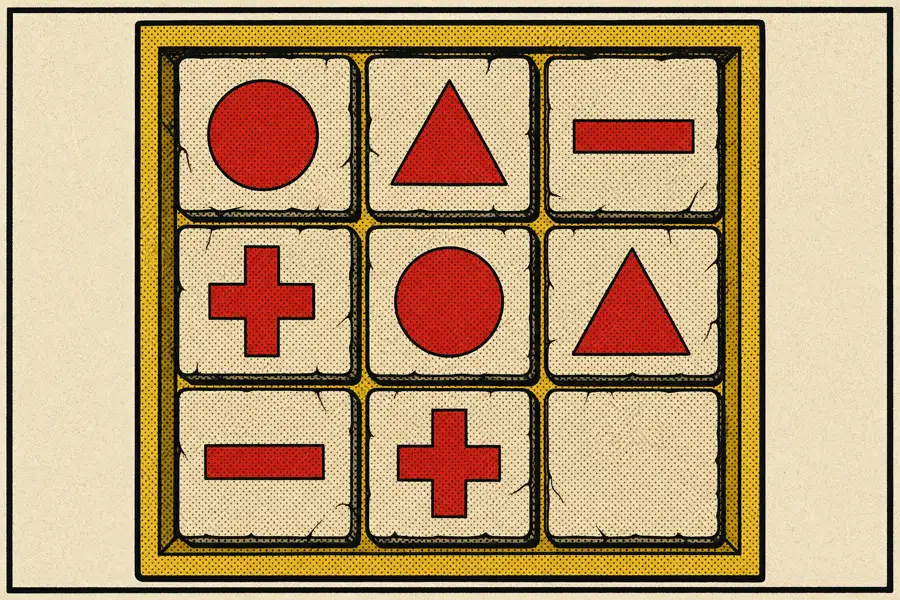 6 min
The Ninth Square
Eight squares are filled in. Work out the ninth.
-
 1 min
Reaction Time
Five taps, timed to the millisecond.
-
 3 min
Digit Span
A number appears, then it is gone. Type it back.
-
 4 min
Confidence Calibration
Answer, then bet on your answer.
-
 3 min
Ten Questions
The first answer that comes to mind is usually wrong.
Reading, not testing
 Where your rank comes from
What a percentile is measured against — and four things it cannot tell you.
 Why the wrong answer arrives first
The eight traps our questions are built on, each with the experiment that caught it.
 All thirty facets, with the questions
What each facet measures, and the four questions that score it.
What a score here is worth
Two of these measure you. Three measure a moment.
Personality and digit span barely move if you come back next year. Reaction time, calibration and the ten questions move with sleep, mood and which phone you are holding. If a result surprises you, start by asking which kind it was.
A percentile needs a crowd, and we say whose.
Every ranking here names what it compares you against. Where we have no crowd yet, we say so and give you the raw number. “Top 8%” without of whom is not a result.
Nothing you answer is sent anywhere.
All five are scored by JavaScript on the page in front of you. The personality test is the strict case: 120 answers together are a profile, so we count how far you got and never what you picked. The privacy page lists what is recorded.
These are not clinical instruments.
The personality questions are the public-domain IPIP-NEO pool and the timing tasks follow standard designs — but a test you take alone on a phone is not a diagnosis. If a result worries you, take it to someone qualified, not to a retake.